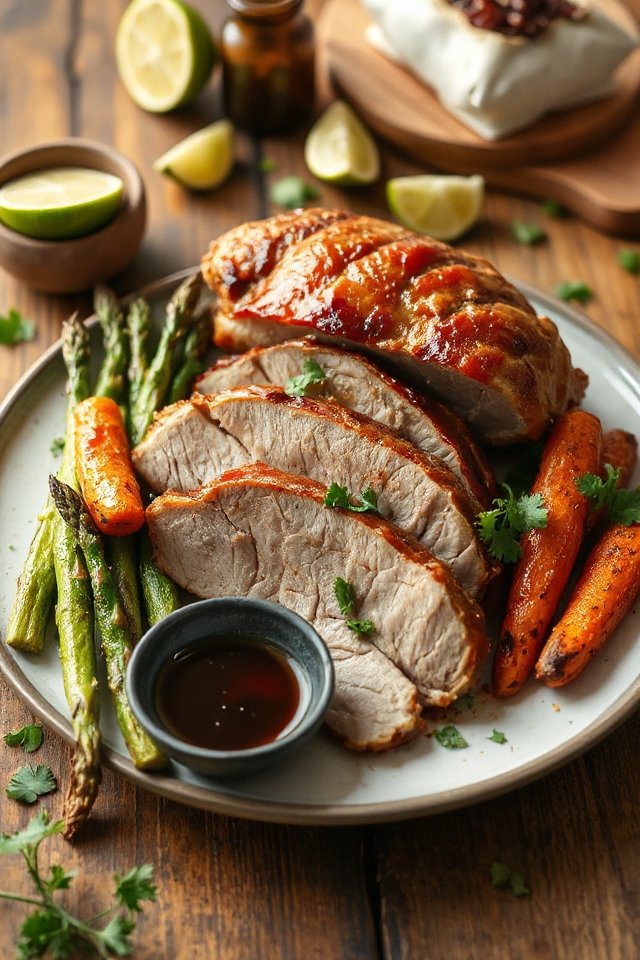
Why the Roast Pork Tenderloin Is Great For Burning Fat
Although many might think of pork as a guilty pleasure, I believe roast pork tenderloin can actually be a fantastic option for those looking to burn fat.
It’s leaner than other cuts, packed with protein to keep you feeling full longer. Plus, the combination of spices and marinade adds flavor without piling on calories.
When I prepare it, I’m mindful of portion sizes, and I love how satisfying it feels. The healthy fats in olive oil and the balance of flavors make it a delicious choice, proving that enjoying your meals doesn’t have to mean sacrificing your health goals.
Ingredients of Roast Pork Tenderloin
When it comes to making a delicious roast pork tenderloin, the ingredients you choose can make all the difference. This recipe strikes a perfect balance between savory and slightly sweet, thanks to a delightful marinade. It’s like a cozy hug for your taste buds, wrapping them in flavors that dance around the palate.
And the best part? You probably have most of these ingredients already lurking in your kitchen. So, let’s explore what you’ll need to whip up this scrumptious dish.
Here’s what you’ll need to gather for your Ginger-Soy Roast Pork Tenderloin:
- 1/2 teaspoon thyme
- 1/2 teaspoon marjoram
- 1/2 teaspoon sage
- 1/2 teaspoon garlic powder
- 1/2 teaspoon onion powder
- 1/2 teaspoon ground ginger
- 2 tablespoons soy sauce
- 1 tablespoon Worcestershire sauce
- 1 tablespoon olive oil
- 2 lbs pork tenderloin
Now, before you rush off to the grocery store, let’s chat about a couple of considerations regarding these ingredients. Fresh herbs like thyme and sage can elevate your dish, but dried ones work just fine if that’s what you have on hand.
And speaking of soy sauce, if you’re looking to cut back on sodium, consider low-sodium soy sauce or even tamari for a gluten-free option. The pork tenderloin is the star here—a lean cut that cooks beautifully and absorbs all those fantastic flavors from the marinade.
Just remember, marinating is key; it’s like giving your pork a spa day before it hits the oven. So, do yourself a favor and let it soak up those flavors for at least eight hours. Trust me, your future self will thank you when you take that first bite.
How to Make Roast Pork Tenderloin
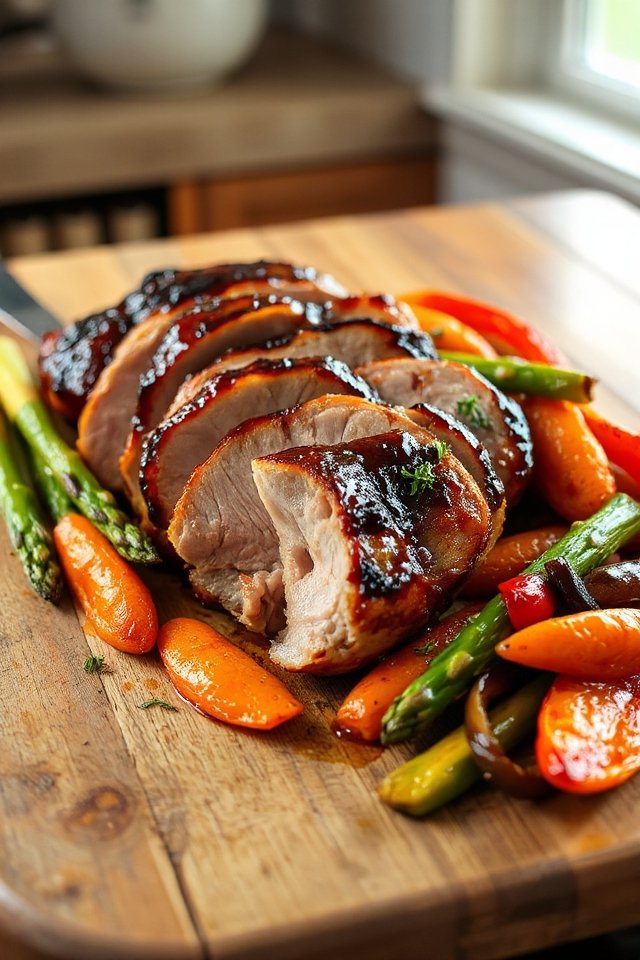
Alright, let’s plunge into the delightful process of making your Ginger-Soy Roast Pork Tenderloin. First things first, you’ll want to gather all those fantastic ingredients we talked about—especially the 2 lbs of pork tenderloin, which is going to be the star of the show.
Now, I know marinating might sound like a fancy chef trick, but trust me, it’s super easy and totally worth it. Start by mixing together 1/2 teaspoon thyme, 1/2 teaspoon marjoram, 1/2 teaspoon sage, 1/2 teaspoon garlic powder, 1/2 teaspoon onion powder, and 1/2 teaspoon ground ginger in a bowl. It smells heavenly, right?
Now, let’s bring that marinade to life. In the same bowl, add 2 tablespoons of soy sauce, 1 tablespoon of Worcestershire sauce, and 1 tablespoon of olive oil. Give it a good stir until everything is well combined. You want to create a lovely, fragrant blend that will infuse your pork with flavor.
Next, take your pork tenderloin and place it in a shallow dish or a resealable plastic bag. Pour that delicious marinade all over the pork, making sure it’s well-coated. It’s a bit messy, but who doesn’t love a little hands-on cooking?
Pop it in the fridge to marinate for at least 8 hours—trust me, this is the spa day for your pork, and it makes all the difference.
When you’re ready to cook, preheat your oven to 350 degrees. Take the pork out of the fridge and let it sit at room temperature for about 20 minutes. This helps it cook evenly, which is a good thing, because nobody wants a dry piece of meat.
Place the pork tenderloin on a roasting pan and roast it uncovered for about 45 minutes, or until it reaches an internal temperature of 145 degrees. The aroma wafting through your home will have you drooling, and probably wondering why you don’t roast pork more often.
Once it’s done, don’t rush—let it rest for 15 minutes before carving it into 1/4-inch slices. This resting period is essential, as it allows the juices to redistribute, making each slice tender and juicy.
And there you have it, a beautifully roasted pork tenderloin that’s sure to impress, even if you forgot to clean the kitchen before your guests arrived. Just serve it up and enjoy the compliments.
Roast Pork Tenderloin Substitutions & Variations For Low Carb Diets
After mastering the art of roasting a pork tenderloin, you might be wondering how to adapt this delicious recipe for a low-carb diet.
To keep things low-carb, I suggest swapping regular soy sauce for a low-sodium or gluten-free version. You can also replace Worcestershire sauce with a homemade mix of vinegar and spices.
For a flavor boost, consider adding fresh herbs like rosemary or thyme instead of sugar-laden marinades. If you’re looking for a different protein, chicken or turkey tenderloin works well too.
Don’t hesitate to experiment with low-carb vegetables as sides for a complete meal. Enjoy!
What to Serve with Roast Pork Tenderloin
What should you serve with roast pork tenderloin to complement its flavors?
I love pairing it with roasted vegetables like Brussels sprouts or carrots, as their sweetness balances the savory pork.
A creamy mashed potato or a flavorful rice pilaf adds a comforting touch.
For a revitalizing side, consider a crisp apple or cabbage slaw, which cuts through the richness.
Don’t forget a tangy sauce, like a mustard or apple chutney, to elevate each bite.
With these sides, your meal will be vibrant and satisfying, perfectly enhancing the ginger-soy glaze on your tenderloin.
Enjoy your delicious feast!
Additional Tips To Decrease Calories
To enjoy a delicious ginger-soy roast pork tenderloin while keeping calories in check, I recommend making a few simple adjustments.
First, consider using a leaner cut of pork, like pork loin, instead of tenderloin. You can also reduce the olive oil in the marinade to just one teaspoon or substitute it with a low-sodium broth.
Opt for low-sodium soy sauce to cut down on sodium and calories. Finally, increase the amount of herbs and spices for flavor without adding calories.
These tweaks let you savor the dish guilt-free while enjoying fantastic taste!